
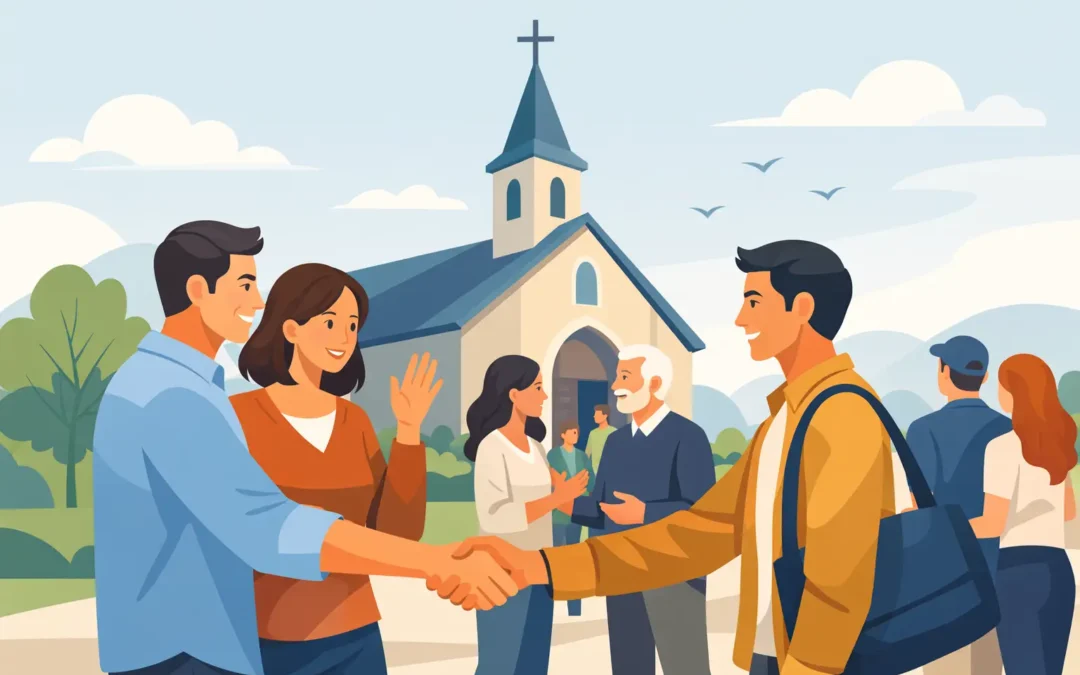
Walking into a church for the first time can feel like showing up to a family gathering where everyone else already knows the names, the routines, and where the coffee is. If you have been wondering how to join a church community, you are not alone. A lot of people want faith, friendship, and spiritual support, but they are not sure how to move from visiting a church to actually belonging there.
The good news is that joining a church community usually starts smaller than people think. It is not about having all the right answers, knowing the Bible front to back, or instantly feeling at home on day one. More often, it begins with one simple step, then another, until familiar faces become real relationships and church becomes part of your life instead of just part of your weekend.
How to join a church community without forcing it
The first thing to know is that healthy church connection takes a little time. You do not need to rush yourself into every ministry, every group, or every event just to prove you are serious. Real belonging grows through consistency, trust, and shared experience.
Start by attending regularly. That may sound basic, but it matters. When you show up more than once, you give yourself a real chance to notice the culture of the church, hear the teaching, and decide whether the church is helping you grow closer to Jesus. You also give others the chance to recognize you, welcome you, and begin building a relationship.
For some people, attending in person right away feels easy. For others, watching online first is a better starting point. That is completely okay. If you are easing back into church after a long time away, carrying church hurt, or simply trying to figure out what kind of church feels right for your family, beginning online can lower the pressure. The key is to keep moving toward connection rather than staying anonymous forever.
Look for a church where you can grow and be known
Not every church community will be the right fit for every person. That does not mean something is wrong. It means relationships matter, and finding a church home is personal.
Pay attention to a few things as you visit. Is the message biblical and practical? Do people seem welcoming without feeling pushy? Is there a clear path for kids, students, adults, and families to grow? Can you imagine building relationships there, not just attending services there?
If you are a parent, this part matters even more. You are not only asking whether the church helps you spiritually. You are also asking whether your children or teenagers will be cared for, encouraged, and taught in ways that help them follow Jesus. A strong church community supports the whole family, not just one hour on Sunday.
It is also wise to be honest about your season of life. A young couple, a single adult, a blended family, and someone walking through grief may all need different kinds of support. A good church community will make room for real life, not just polished appearances.
Move from attending to connecting
If you want to know how to join a church community in a meaningful way, this is the turning point. Attendance helps you become familiar. Connection helps you belong.
After a visit or two, take a next step that puts you in conversation with people. That could be stopping by a welcome area, introducing yourself to a pastor or team member, filling out a connect card, or asking how to learn more about groups and ministries. It may feel small, but it changes everything. Churches can only help you get connected when they know you want to be connected.
This is where many people hesitate. They think, I will reach out when I feel more ready. Usually, readiness comes after the step, not before it. You do not need a perfect story or a polished spiritual background. You just need the willingness to say, I am here, and I would like to find my place.
At True Life Church, for example, the goal is to make those next steps clear and welcoming so people can move from first-time guest to real community without guessing what to do next. That kind of clarity matters, especially if church feels new again.
Join a group before you feel fully settled
Large gatherings are important, but most deep church relationships are built in smaller spaces. If you only attend worship services, you may enjoy church without ever really becoming part of the church community.
Small groups, Bible studies, prayer groups, men’s gatherings, women’s gatherings, and student environments create the kind of repeated interaction where trust grows. You hear other people’s stories. They hear yours. You learn how to pray for one another. Over time, those ordinary conversations become real support.
If joining a group sounds intimidating, remember that almost everyone feels awkward the first time. The first meeting may feel quiet. The second may feel a little easier. By the third or fourth, you may start looking forward to seeing people. That is often how community forms – not in one big emotional moment, but in steady, faithful presence.
There is a trade-off here. If you wait until you feel completely comfortable, you may never join. If you jump into the very first group without asking whether it fits your season, you may get discouraged. It is okay to ask questions and find the right environment.
Serve with people, not just for people
One of the fastest ways to feel connected in a church is to serve. When you serve, you stop experiencing church only as something you receive and begin experiencing it as a place where your gifts matter.
Serving does not mean you need to preach, lead a class, or know everything. It can be as simple as greeting, helping with kids, supporting students, assisting with hospitality, or being part of a practical team behind the scenes. The role itself matters, but the relationships built while serving often matter even more.
There is something powerful about working alongside people who share your faith and your heart for others. Conversations happen naturally. Trust builds faster. You begin to see yourself not as an outsider trying to fit in, but as part of a church family with a purpose.
That said, serving too quickly can sometimes feel overwhelming if you are still healing or still exploring. If that is your story, give yourself grace. Healthy churches will invite you into purpose without pressuring you beyond what is wise.
Let people support your real life
Church community is not just about singing together or attending events. It is also about being known in your real needs and real questions. If you are facing struggles in your marriage, parenting, finances, mental health, or faith, church should be one of the places where you can find encouragement and prayer.
This part requires courage. It is easier to stay polite, smile, and keep everything on the surface. But surface-level connection rarely becomes meaningful community. You do not need to tell everyone everything, but letting a trusted leader, pastor, or group member know what you are carrying opens the door for real support.
A healthy church does not expect perfection. It walks with people as they grow. That includes seasons of doubt, rebuilding, repentance, healing, and fresh starts. If you are looking for a church home, look for a community where grace and truth live together.
What if you are shy, skeptical, or coming back after hurt?
Learning how to join a church community can feel harder when you carry extra hesitation. Maybe you are introverted. Maybe you had a bad church experience. Maybe you believe in Jesus but struggle to trust church people.
Those concerns are real. You do not need to pretend they are not.
If you are shy, focus on one step at a time. Attend regularly. Learn a few names. Join one group. Have one conversation after service instead of rushing out every week. Quiet people can build strong church relationships too. It just may happen more gradually.
If you are skeptical, give yourself room to observe while staying open. Ask questions. Watch whether the church lives what it teaches. Pay attention to how leaders treat people, especially those who are hurting or new.
If you are returning after church hurt, healing may take time. That does not make you difficult. It makes you human. A healthy church community will understand that trust is rebuilt slowly.
How to know when a church is becoming home
Usually, you can tell a church is becoming home before you officially say it out loud. You start recognizing people and being recognized. You have a few names in your phone from church. You know where to go, who to ask, and how to take your next step. You are not just attending anymore. You are participating.
You also begin to care about the spiritual health of the community, not just your own preferences. That is a strong sign of belonging. Church becomes more than a place you consume. It becomes a people you love.
If that is what you are looking for, start simple. Show up. Introduce yourself. Join a group. Let people know your name and your story. Say yes to a next step when it makes sense. God often builds community through ordinary moments of faithfulness.
You do not have to find perfect people to find a church home. You just need a Christ-centered community where you can grow, be known, and walk through life with others who are learning to follow Jesus too.