
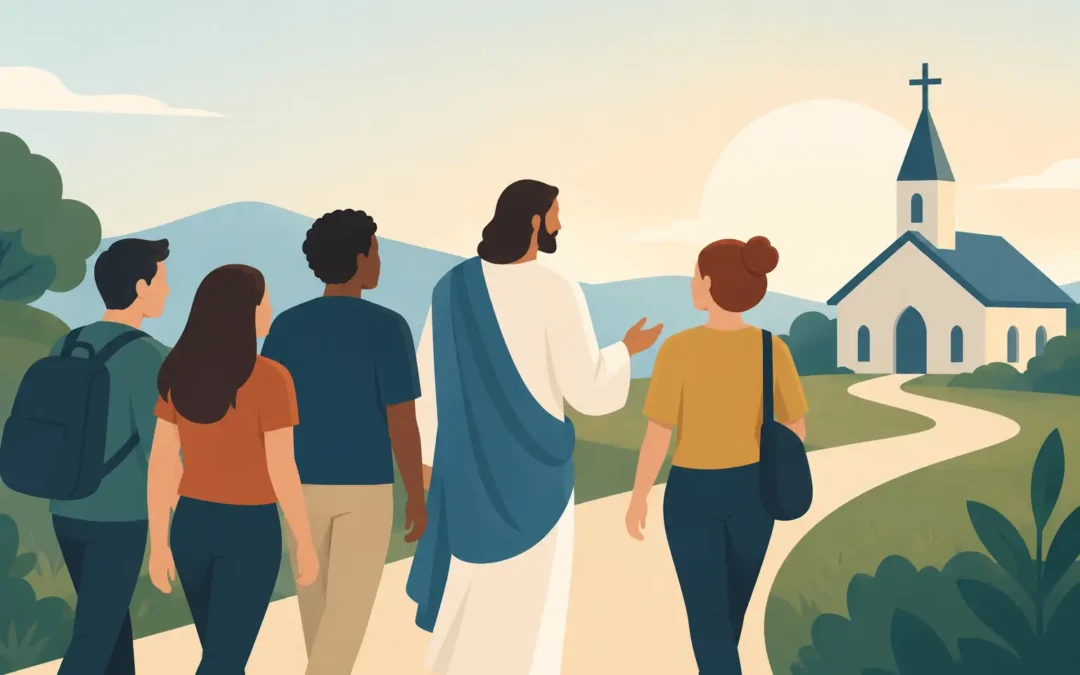
A Sunday service can be a meaningful beginning, but it was never meant to be the whole journey. Questions still show up on Monday morning. Parenting feels demanding. Relationships need patience. Financial pressure can stir fear. What is church discipleship? It is the ongoing process of learning to follow Jesus in the real places where life happens.
Church discipleship is not reserved for pastors, Bible experts, or people who have every answer. It is for anyone who wants faith to become more than a weekly routine. It is a pathway for growing closer to Jesus, becoming more like Him, and learning to live His way with the encouragement of other people.
What Is Church Discipleship?
At its heart, discipleship means following Jesus as a learner and a friend. Jesus invited ordinary people to walk with Him, listen to His teaching, watch how He loved others, and put His words into practice. That same invitation is still open today.
Church discipleship gives that journey a place to grow. It happens as people gather for worship, open the Bible, pray honestly, build relationships, serve others, and receive wise encouragement. It is not simply collecting more information about God. It is allowing the truth of God to shape your choices, character, relationships, and purpose.
A disciple is not someone who has arrived. A disciple is someone who keeps saying yes to Jesus. Some seasons bring big breakthroughs. Other seasons look quieter, like choosing forgiveness, asking for prayer, showing up to a group, or trusting God one day at a time. Both are part of real spiritual growth.
Discipleship Is More Than Attending Church
Attending church matters. Worship helps us turn our attention back to God, hear biblical truth, and remember we are not alone. But discipleship grows deeper when faith moves beyond a seat in a service and into daily life.
You might hear a message on peace, then practice that truth when anxiety rises during a difficult week. You might study generosity, then make a thoughtful decision about your budget. You might learn about God’s grace, then extend grace to a spouse, child, coworker, or neighbor. This is where faith becomes personal and practical.
That is also why discipleship cannot be reduced to checking off religious tasks. Reading Scripture, praying, giving, serving, and gathering with other believers are not ways to earn God’s love. They are ways we make room to know Him more fully and respond to the love He has already shown us through Jesus.
Why Community Matters in Following Jesus
Most people know how easy it is to start something with good intentions and then lose momentum. Spiritual growth is no different. We were created for relationship, and following Jesus becomes stronger when we do not try to do it alone.
In a healthy church community, people can be known without pretending. There is room to bring questions, celebrate progress, admit struggles, and ask for prayer. A small group, a trusted mentor, or a faithful friend can help you see what you may miss on your own. Sometimes we need someone to remind us of God’s promises. Sometimes we need someone to lovingly challenge us toward a better next step.
Community also helps faith reach every generation. Children need adults who model what it looks like to trust Jesus. Students need a place where they can ask honest questions and find belonging. Parents need encouragement when family life feels full. Adults of every age need people who will walk alongside them through joy, loss, change, and uncertainty.
This does not mean every group or relationship will feel instantly comfortable. Building trust takes time, especially if you are new to church or have been hurt before. Start small. Come as you are, listen, and take one meaningful step toward connection. Belonging often grows through consistency.
What Church Discipleship Looks Like in Everyday Life
Discipleship can take many forms because people are in different places on their faith journey. For someone exploring Christianity, it may begin with attending a service, watching online, or asking a trusted person a question about Jesus. For a longtime believer, it may mean leading a group, mentoring someone else, or stepping into a new area of service.
For many people, discipleship includes a steady rhythm of worship, Scripture, prayer, relationships, and service. Each part matters, but no single rhythm works exactly the same for every person. A parent with young children may need a simple and realistic plan. Someone working long hours may start with a few minutes of Scripture and prayer before the day begins. A student may grow most through a conversation with a leader and a group of peers.
The goal is not to create a packed schedule. The goal is to build a life centered on Jesus. When your faith has room in your everyday decisions, discipleship is already taking root.
Scripture gives direction
The Bible helps us understand who God is, who we are, and how to live with wisdom. It gives truth when feelings are loud and hope when circumstances are hard. You do not have to understand every passage at once. Begin with a Gospel, ask God to speak to you, and look for one truth you can live out today.
Prayer builds relationship
Prayer is not a polished speech. It is honest conversation with God. Bring your gratitude, concerns, doubts, needs, and hopes to Him. Prayer reminds us that we do not carry life’s weight by ourselves. It also helps us become more aware of where God is leading us.
Serving turns faith outward
Jesus showed us that greatness looks like serving others. Serving at church, caring for a neighbor, helping a family in need, or using your gifts to strengthen someone else can become a powerful part of discipleship. It shifts our attention from only asking, “What do I need?” to asking, “How can God use me?”
Growth Is a Journey, Not a Performance
One of the biggest misunderstandings about discipleship is the idea that mature Christians never struggle. The truth is that following Jesus does not remove every hard moment. It gives us a Savior, a community, and a foundation that can hold us in the middle of those moments.
There will be days when prayer feels natural and days when finding the words feels difficult. There may be seasons when you see clear progress and seasons when growth feels slow. Do not mistake slow growth for no growth. A life changed by Jesus is often formed through small, faithful choices repeated over time.
Grace is essential here. God meets people with truth and love. He calls us forward, but He does not ask us to perform our way into His family. Discipleship is a response to grace, not a race for approval.
How to Take Your Next Step
If you are wondering where to begin, choose one step that is clear and doable. Attend a worship service consistently. Join a group where you can build genuine relationships. Set aside time to read a portion of Scripture and pray. Ask for prayer when life feels heavy. Find a place to serve that fits your gifts and season.
You do not need to do everything at once. In fact, trying to change every part of your life overnight can lead to discouragement. Start where you are, and let faithfulness grow from there. At True Life Church, the goal is not to make church feel complicated. It is to help people find a next step toward Jesus, community, and a life of purpose.
If you have followed Jesus for years, your next step may include helping someone else take theirs. Discipleship is meant to multiply. A kind conversation, an invitation to a group, a prayer with a friend, or a willingness to share what God has done in your life can make a lasting difference.
Jesus is not asking you to have a perfect story before you come closer. He is inviting you to walk with Him today. Take the next faithful step in front of you, and trust that God can use it to shape a life that is fuller, stronger, and rooted in hope.