
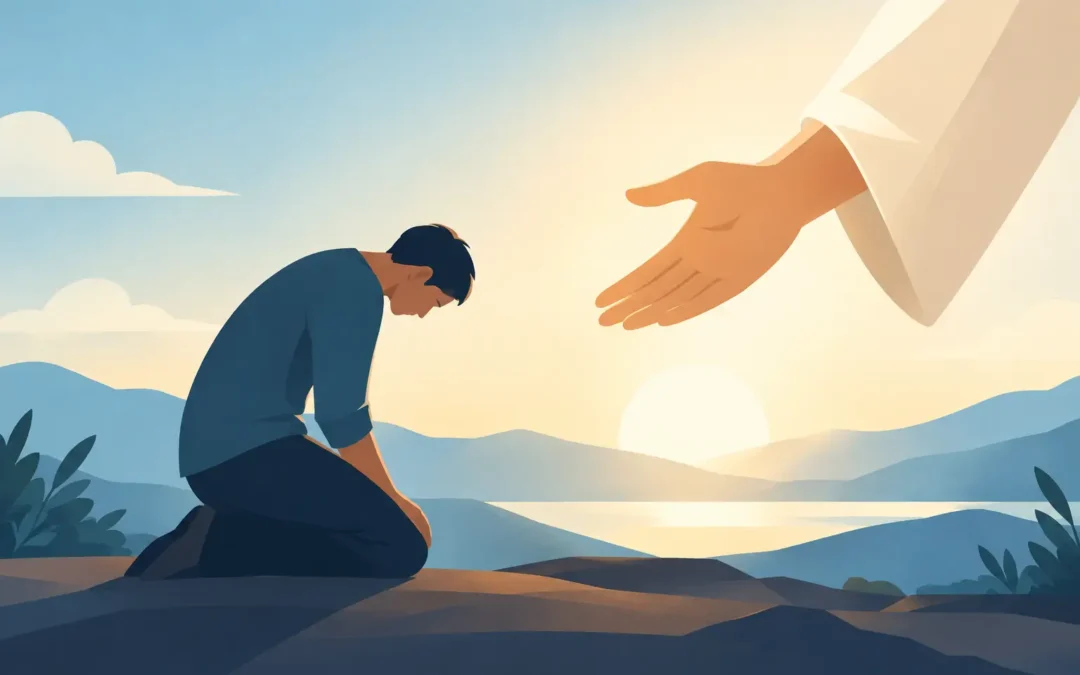
Some questions are hard to say out loud because they carry the weight of a real story. Maybe you are asking, can God forgive anyone, because of choices you regret, words you cannot take back, a relationship you damaged, or a season that left you feeling far from God. The good news of Jesus is not reserved for people with clean records, easy stories, or a religious background. It is for people who need mercy.
The Bible gives a clear answer: no person is beyond the reach of God’s forgiveness. His grace is bigger than your past, and Jesus came for sinners, not for people who have already managed to fix themselves.
Can God Forgive Anyone? What the Bible Says
God’s willingness to forgive is one of the clearest themes in Scripture. First John 1:9 says that if we confess our sins, God is faithful and just to forgive us and cleanse us from all unrighteousness. That promise is not built on the size of our failure. It is built on God’s character and on what Jesus has done.
Jesus did not avoid broken people. He welcomed them. He ate with people others judged, spoke with people who felt overlooked, and offered new life to people carrying deep shame. His ministry showed that grace is personal. He sees the whole story, including the parts we try to hide, and He still invites us to come near.
Consider the people God forgave and restored in the Bible. David committed serious sin and later came to God with honest repentance. Peter denied Jesus when he was afraid, yet Jesus restored him and gave him a purpose. Paul had persecuted Christians before he encountered Jesus and became one of the most influential leaders in the early church.
Their stories do not make sin small. They make God’s mercy look big.
Forgiveness Is Not Pretending Sin Did Not Matter
Sometimes people resist the idea that God could forgive anyone because they do not want evil to be minimized. That concern makes sense. Forgiveness does not mean God ignores the damage caused by sin or calls wrong things good.
Sin matters. It hurts people, breaks trust, and separates us from the life God wants for us. Jesus’ death on the cross shows both the seriousness of sin and the depth of God’s love. Grace was never cheap. Jesus paid the price so that forgiveness could be offered freely to us.
God’s forgiveness also does not erase every earthly consequence. A person may be forgiven by God and still need to apologize, make restitution, seek counseling, accept legal consequences, or patiently rebuild trust over time. In some situations, a relationship may not be safe or healthy to restore, especially where abuse, manipulation, or ongoing harm is involved. Forgiveness is not a command to ignore wisdom, boundaries, or accountability.
But consequences are not the same as condemnation. In Christ, your sin does not get the final word over your identity.
What Does It Mean to Receive God’s Forgiveness?
Receiving forgiveness begins with coming to God honestly. You do not need polished religious language. You can tell Him the truth about what happened, what you did, and where you need help. God already knows, but confession brings what is hidden into the light.
Repentance is an important part of that response. To repent means more than feeling bad or being afraid of consequences. It means turning around. It is choosing to move away from sin and toward God, trusting Him to lead you into a different way of life.
For many people, this happens in a simple but sincere prayer: “Jesus, I need You. I believe You died and rose again for me. Forgive me, lead me, and make me new.” The exact wording is not the point. A real surrender of your heart is.
Romans 8:1 offers this hope: “There is therefore now no condemnation for those who are in Christ Jesus.” If you have trusted Jesus, you do not have to keep trying to punish yourself to prove that you are sorry. You can walk forward in the freedom He gives.
Grace Changes More Than Your Record
God forgives us completely, but He also transforms us gradually. Some changes happen quickly. Others take time, prayer, honest conversations, and support from trusted people. That does not mean grace failed. Growth is often a process.
A person who has received God’s forgiveness can begin to make new choices: telling the truth, asking for help, ending destructive patterns, learning to forgive others, and building a life that reflects Jesus. This is not an attempt to earn God’s love. It is the fruit of being loved by Him.
If addiction, anxiety, anger, or past trauma is part of your story, spiritual growth may also include practical care. Talk with a pastor, counselor, recovery group, or trusted Christian friend. Asking for support is not weakness. It is a wise step toward healing.
What If You Have Asked God to Forgive You Before?
This is where many people get stuck. They have prayed, confessed, and asked God for forgiveness, but they still feel guilty. They wonder whether they meant it enough, prayed correctly, or have to keep earning another chance.
Feelings are real, but they are not always reliable indicators of God’s response. When you confess and turn to Jesus, trust His promise more than your shame. The enemy accuses. Jesus restores.
That does not mean you should brush aside conviction when God brings something to your attention. Conviction is specific and leads us back to God. Shame is crushing and tells us to hide from Him. Conviction says, “Bring this into the light and let God help you.” Shame says, “You are too far gone.” One leads to life. The other keeps people trapped.
When old guilt returns, you can remind yourself of what is true: Jesus has paid for your sin. You are still responsible to make things right where you can, but you are not required to live chained to your former self.
A New Beginning Can Start Today
You may be carrying a secret that has shaped how you see yourself. Maybe others do not know it, but you do. Or perhaps your past is public, and you wonder whether anyone could ever see more in you than your worst moment.
Jesus does. He does not excuse your sin, but He does not reduce you to it either. In Him, forgiveness is not merely a second chance to try harder. It is an invitation into a new life, a new identity, and a new future.
You do not have to take every next step alone. A healthy church community can give you room to be honest, receive prayer, learn Scripture, and grow alongside people who know they need grace too. At True Life Church, we believe no one is disqualified from coming to Jesus and taking a next step toward the life He has for them.
If you are ready, start with honesty. Tell God where you are. Receive the grace Jesus offers. Then take one faithful step today: ask for prayer, talk with someone you trust, make a needed call, or choose a boundary that helps you walk in freedom. Your past may explain part of your story, but with Jesus, it does not have to define the rest of it.