
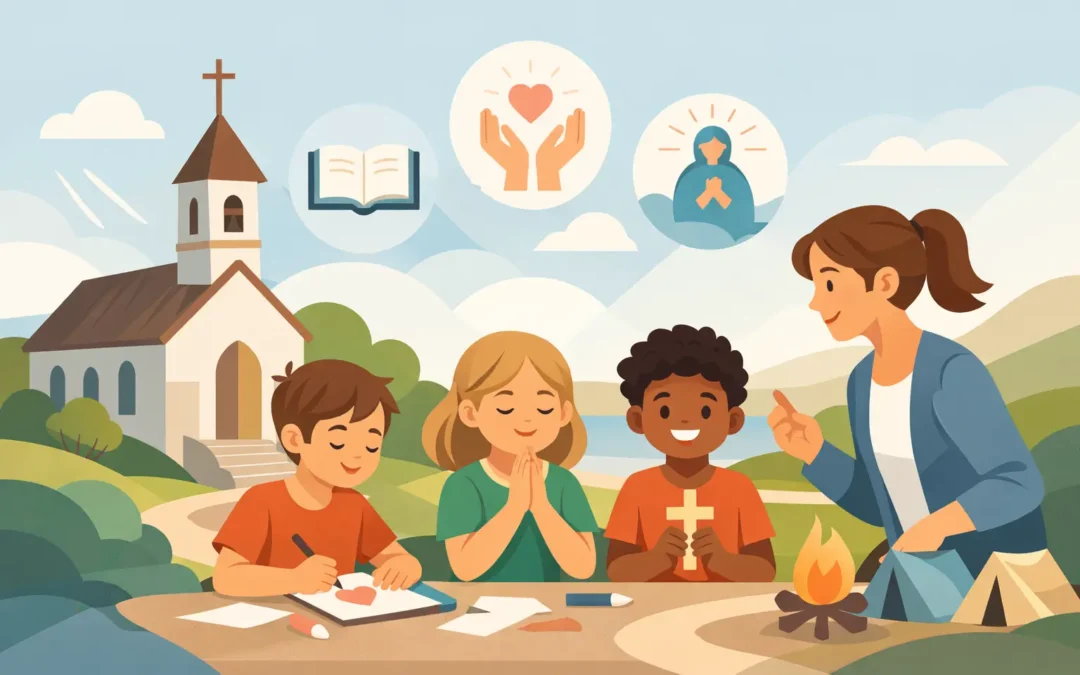
When parents ask about the best church programs for kids, they usually are not just asking for a safe room, a fun lesson, or a friendly volunteer. They are asking a bigger question: Will my child be known here? Will they learn about Jesus in a way they can understand? Will this church help our family grow stronger, not just keep the kids busy for an hour?
Those are the right questions to ask. A great kids ministry does more than fill a schedule. It helps children build a real foundation of faith, feel secure in a loving environment, and begin to understand that church is not just a place they go. It is a place where they belong.
What makes the best church programs for kids?
The best church programs for kids are not always the biggest, loudest, or most polished. What matters most is whether the program helps children know Jesus, understand biblical truth at their level, and experience consistent care from trusted leaders.
That means strong programs usually have a few things in common. They are age-appropriate, which sounds simple but matters a lot. A preschooler learns through repetition, movement, and simple truths. An elementary-aged child can handle more conversation, memory verses, and practical application. If everything is built for a broad age range with no adjustment, some kids will feel lost while others get bored.
Consistency matters just as much. Kids thrive when they know what to expect. Familiar leaders, a clear check-in process, a regular lesson rhythm, and a warm welcome each week all help children feel safe enough to participate. When kids feel secure, they are more open to learning, asking questions, and forming friendships.
A strong church program also partners with parents instead of replacing them. Church gets a few hours each week. Parents shape the everyday culture of a child’s faith. The healthiest ministries respect that and give families practical ways to keep the conversation going at home.
The types of kids programs that matter most
Not every church organizes ministry the same way, but the strongest children’s ministries usually include a few key kinds of programming.
Weekend kids services
For most families, this is the starting point. A weekend kids service should be engaging, structured, and rooted in Scripture. Kids need more than entertainment. They need Bible teaching they can understand and remember.
A good weekend environment often includes worship, a Bible lesson, small group discussion, prayer, and a simple takeaway. For younger children, that may look like songs, storytelling, crafts, and repetition. For older kids, it may include games, group leaders, and practical conversations about school, kindness, honesty, courage, and prayer.
This is often the first place parents notice whether a ministry is thoughtful or rushed. If the lesson feels random every week, it can be hard for kids to build a real understanding of God’s Word. If the teaching is clear and intentional, children begin connecting what they hear at church to how they live every day.
Midweek programs
Midweek ministry can be a great next step for families who want more than Sunday attendance. These programs often create space for deeper relationships, Scripture memory, prayer, and steady discipleship.
The trade-off is scheduling. Many families already juggle sports, homework, and work demands, so a midweek program only helps if it is realistic for your season of life. But when it fits, it can become one of the most meaningful parts of a child’s church experience because it gives them more time to build trust and community.
Vacation Bible School and seasonal events
Seasonal programs can create unforgettable moments. Vacation Bible School, summer camps, holiday events, and family faith nights often bring fresh energy and help kids invite friends.
These programs are not a substitute for ongoing discipleship, but they can be a powerful on-ramp. A child who is hesitant about church may feel more relaxed attending a special event first. A family that is new to faith may find these moments easier to say yes to than jumping into everything at once.
The key is making sure special events connect back to the bigger mission. A fun week is great. A fun week that helps kids keep growing afterward is even better.
Small groups for kids
Large-group teaching has value, but small groups are often where faith starts to feel personal. In a smaller setting, kids can ask questions, share prayer requests, talk about fears, and process what they are learning.
This matters because children do not all respond the same way. Some kids are ready to speak up in a crowd. Others need a trusted leader to gently draw them out over time. Small groups make room for both.
If a church offers small groups by age or grade, that is often a strong sign the ministry is thinking relationally, not just programmatically.
How to tell if a church program is right for your child
There is no one-size-fits-all answer, because every child is different. A high-energy child may love an interactive environment. A quieter child may do better in a calmer room with gentle leaders. Some kids warm up quickly. Others need several visits before they feel fully comfortable.
That is why parents should pay attention to more than branding or first impressions. Look at how leaders interact with children. Are they patient? Are they attentive? Do they know kids by name, or at least make a real effort to learn? A polished room can look great, but loving leadership is what children remember.
You should also notice whether the church communicates clearly with parents. Good kids ministries explain check-in procedures, safety practices, classroom structure, and what children are learning. Clear communication builds trust. It also shows that the ministry understands what parents need in order to feel confident.
Another helpful question is whether the program supports long-term growth. Does it simply entertain kids while adults attend service, or does it intentionally help children take steps in faith over time? The best ministries think beyond this week. They want to help kids grow into students and adults who know Jesus and love His Church.
Safety, joy, and biblical teaching all belong together
Sometimes parents feel like they have to choose between fun and substance, or between safety and warmth. Healthy church programs do not force that choice. Children need all three.
Safety should be taken seriously. Secure check-in, trained volunteers, age-appropriate classrooms, and clear policies are part of caring well for families. These are not small details. They help create peace of mind for parents and stability for children.
Joy matters too. Kids should enjoy coming to church. They should connect church with love, truth, friendship, and hope. That does not mean every moment has to be loud or flashy. It means the environment should reflect the goodness of God in a way children can feel.
And of course, biblical teaching has to stay central. If kids leave happy but do not learn who Jesus is, the ministry is missing its purpose. If they hear truth without warmth or care, they may struggle to connect that truth to the love of God. The best ministries hold these pieces together.
Why great kids ministry blesses the whole family
When children are growing spiritually, it impacts more than their own lives. It changes the atmosphere of a home. Kids start asking questions about prayer. They remember Bible stories during difficult moments. They bring home truths that shape family conversations in simple but powerful ways.
That is one reason families often look for more than a church service. They are looking for a church home. They want a place where their children can be encouraged, where parents can find support, and where faith feels practical on Monday morning, not just meaningful on Sunday.
In communities like Middleburg, Fleming Island, Green Cove Springs, and Orange Park, families are often balancing a lot. Work schedules are full. Parenting can feel overwhelming. Kids face pressures earlier than many parents expect. A healthy church can be a steady source of encouragement in the middle of all that. At True Life Church, that heart for families matters because ministry is not about adding pressure. It is about helping people take their next step with Jesus in real life.
Best church programs for kids start with the right heart
At the center of it all, the best church programs for kids are built on more than curriculum, music, or classroom design. They are built on a genuine love for children and a clear desire to help them know Jesus.
That kind of ministry is patient. It welcomes first-time families without making them feel awkward. It sees the energetic child, the shy child, the child with big questions, and the child who has never opened a Bible before. It makes room for growth. It gives grace. It teaches truth with compassion.
If you are searching for a church for your family, do not feel pressure to find perfection. Look for a place where your child will be cared for, taught well, and invited into a growing relationship with God. The right kids ministry will not just meet your child where they are. It will help them take their next step in faith with joy, confidence, and a sense of belonging.